

If your crew is buying zip ties by the 100-pack at the hardware store, you're paying retail markup for a supply you burn through every week. Nurseries and landscaping companies that switch to bulk 800-packs typically cut their per-tie cost by more than half — and stop running out mid-job.
What's in this guide
How to choose bulk zip ties for plant support
Plant support work is different from cable management. You're not routing wires behind a panel — you're securing living stems, canes, and branches that flex in the wind, grow in diameter over a season, and sit outdoors in UV and moisture for months at a time. That changes what "good enough" means for a tie.
Three things decide whether a bulk zip tie order is worth the money for a nursery or landscaping crew:
- UV resistance. Standard indoor-grade nylon ties go brittle and snap within a season of direct sun. Anything going on a tree stake, trellis, or greenhouse frame needs UV-stabilized nylon.
- Size range in one box. A single job might need a 4-inch tie for a seedling and a 12-inch tie for a young tree trunk. Buying separate single-size packs for each job wastes time and warehouse space.
- Tensile strength that matches the load. Tying a tomato cage doesn't need the same holding strength as staking a young tree against wind. Overbuying strength just adds cost; underbuying means callbacks.
Why assorted sizes beat single-size bulk buys
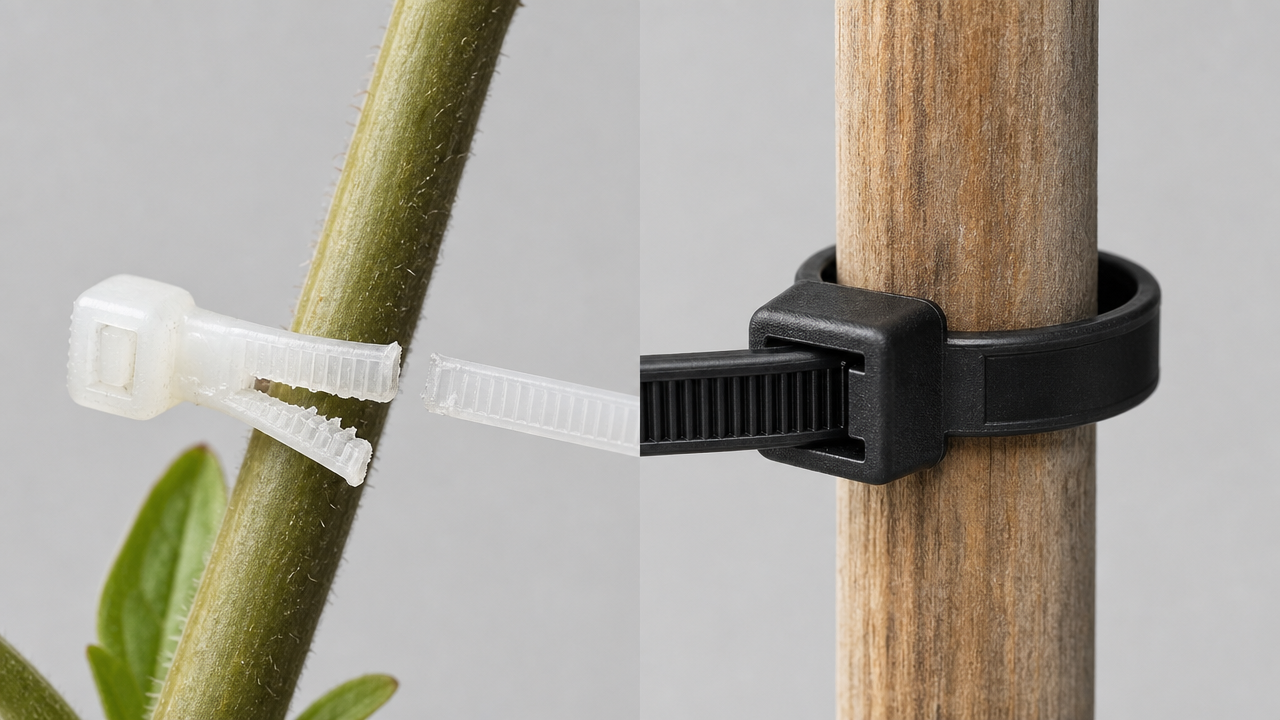
Crews that stock a single size — say, a 1000-pack of 8-inch ties — end up cutting long ties down for small jobs and doubling up short ties for big ones. Both waste material and labor minutes that add up across a season.
An assorted 800-pack spanning 4, 6, 8, 10, and 12 inches solves this without needing five separate SKUs on the shelf. One box, one reorder point, and a size for whatever shows up on the day's job list — from securing a single stake in a five-gallon pot to bundling a full trellis run.
Color also matters more than most buyers expect. Black ties disappear visually against soil, mulch, and dark stakes — useful when a client doesn't want ties standing out in a finished landscape. White ties show up clearly for quick visual inspection during walkthroughs and are easier to spot for removal once a plant is established. Stocking both gives a crew flexibility without adding real cost, since both run the same price per 800-pack.
A crew running five properties a week doesn't have time to hunt for the right size mid-job — the box needs to already have it.
Stock up on assorted bulk zip ties at nursery pricing
Shop bulk zip ties →Specs that matter for outdoor plant tying
Not all listed specs affect real-world performance equally. Here's what to actually check before ordering a case for the season:
| Spec | What to look for | Why it matters |
|---|---|---|
| Material | UV-resistant nylon | Resists cracking and yellowing from full-sun exposure |
| Size range | 4"–12" in one pack | Covers seedlings through young tree trunks without separate SKUs |
| Tensile strength | 18–50 lb | Holds stakes and canes through wind without snapping |
| Locking mechanism | Self-locking head | Stays put through a full growing season without slipping |
| Pack size | 800 count | Lasts a crew multiple properties before reordering |
Both the black and white 800-pack assortments from ALBO carry these specs, which is why they show up on Binam's landscaping and property-maintenance accounts as a standing reorder rather than a one-off purchase.
Tying techniques that protect stems and branches
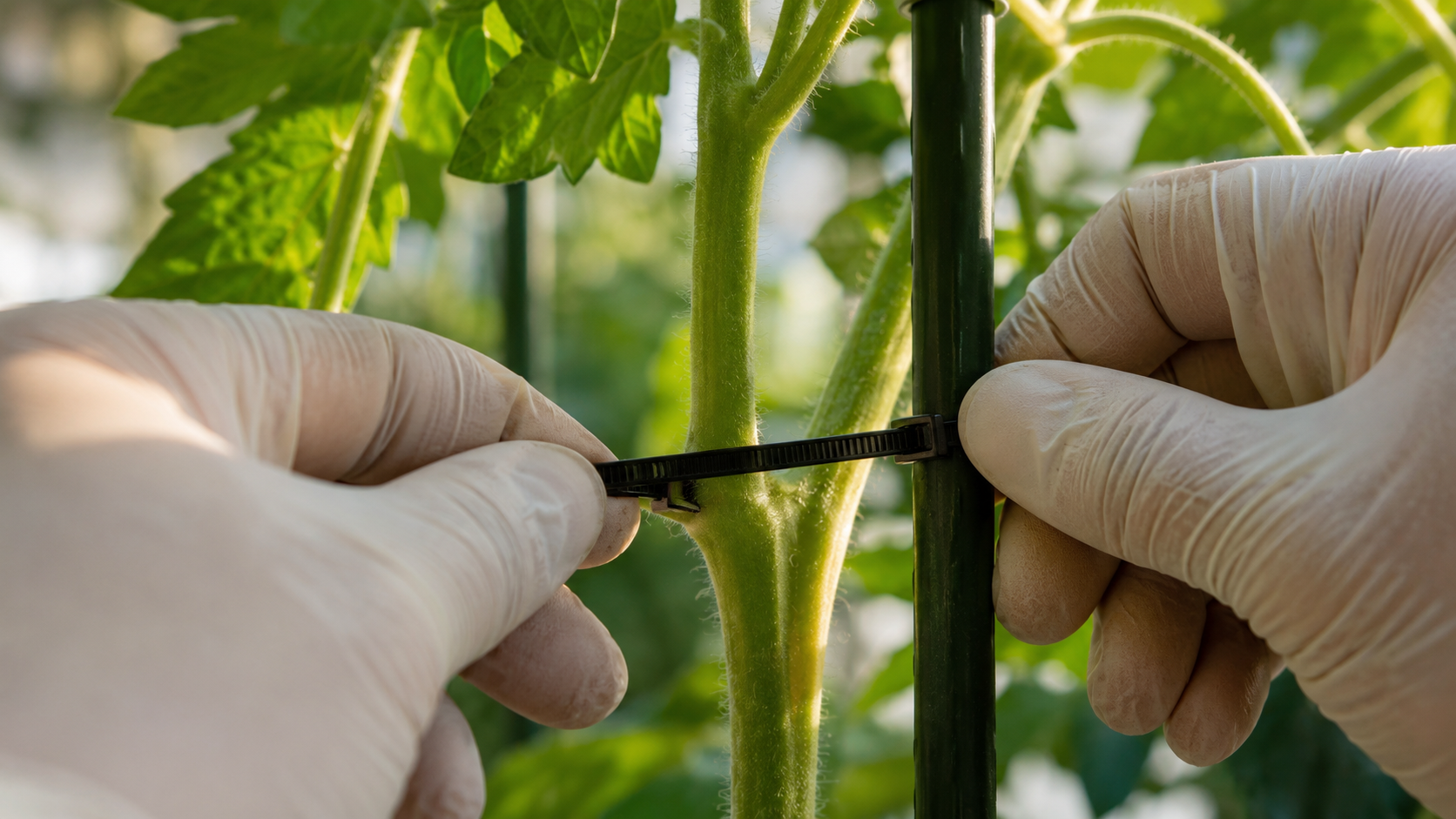
Step 1 — Leave slack for growth
Loop the tie in a figure-eight between the stake and the stem rather than cinching both together tightly. This keeps the tie from cutting into the plant as the stem thickens over the season.
Step 2 — Position the lock away from the stem
Orient the self-locking head so it sits against the stake, not the plant tissue. A hard plastic edge pressed directly against a stem for months can cause girdling on woody plants.
Step 3 — Cut flush, don't leave a tail
Trim the excess tie flush with the locking head. A leftover tail can snag on mowers, hoses, or clothing during routine maintenance visits.
Step 4 — Check and loosen at re-visits
On recurring maintenance accounts, check ties at each visit through the growing season and loosen or replace any that are starting to bite into bark or stems.
Common mistakes and how to avoid them
Cinching too tight on day one
A tie that looks perfectly snug at installation is often already too tight once the stem gains a season's growth. Leave visible slack from the start.
Using indoor-rated ties outdoors
Standard nylon ties not rated for UV exposure can start failing within weeks in full sun, leading to callbacks and re-stakes mid-season.
Stocking only one size
Crews that carry a single tie size end up improvising — doubling up short ties or hacking long ones down with a knife — both of which cost labor minutes on every job.
Skipping the mid-season check
Ties left unchecked for a full growing season are the most common cause of girdling damage on staked young trees and shrubs.
Frequently asked questions
How many zip ties does a typical landscaping crew use per week?
It varies widely by account mix, but crews running multiple residential or commercial properties commonly use several hundred ties a week across staking, trellising, and general tie-down work — which is exactly the volume an 800-pack is sized for.
Are UV-resistant zip ties reusable?
They're designed for single-season use in most plant support applications. The self-locking mechanism isn't meant to be released and reused, and by the time a tie needs removal it's often been outdoors long enough that re-tensioning isn't reliable.
What size zip tie works for a young tree stake?
10 to 12 inch ties are typically the right range for staking young trees, giving enough length to loop loosely around a trunk and stake without cinching tight.
Do black or white zip ties perform differently outdoors?
Performance is identical when both are UV-rated nylon — the color is a visual choice, not a durability difference. Black tends to blend into mulch and stakes; white is easier to spot for inspection and removal.
Can these ties handle trellis and greenhouse frame work, not just individual plants?
Yes — the same tensile strength and UV resistance that hold up on tree stakes work for securing mesh, shade cloth, and irrigation lines to trellis and greenhouse framing.
Bottom line
For nurseries and landscaping crews, the math on bulk zip ties is straightforward: an assorted 800-pack covers more job types than a single-size box, costs less per tie than repeated hardware-store runs, and keeps a crew from stalling out mid-job over a missing size. Stock both black and white so the right look is always on the truck.
Ready to stock up for the season?
Shop bulk zip ties for landscaping →


