

The zip ties in your junk drawer probably aren't rated for what you're about to do to them — months outside, freezing nights, and full sun on a roofline. Here's what actually holds up for hanging lights and outdoor decorations, and which size to grab for each job.
What's in this guide
Why regular zip ties fail on outdoor decorations
Holiday lights and outdoor decor go up for weeks or months at a stretch, through sun, rain, and freezing overnight temperatures. Standard indoor-grade zip ties — the kind in most junk drawers — aren't built for that. UV exposure breaks down the nylon at a molecular level, and cold snaps make plastic brittle right when wind loads are highest.
The result is predictable: a tie that looked fine in November snaps in a January wind, and a string of lights ends up dangling or on the ground. Using UV-stabilized outdoor-rated ties from the start avoids the mid-season re-hang.
- UV resistance keeps the tie flexible instead of turning brittle after weeks in the sun.
- Weather resistance means freeze-thaw cycles don't crack the plastic overnight.
- The right length avoids over-cinching light strings or gutters, which stresses both the tie and what it's attached to.
Indoor-rated vs UV-rated: what the difference actually looks like
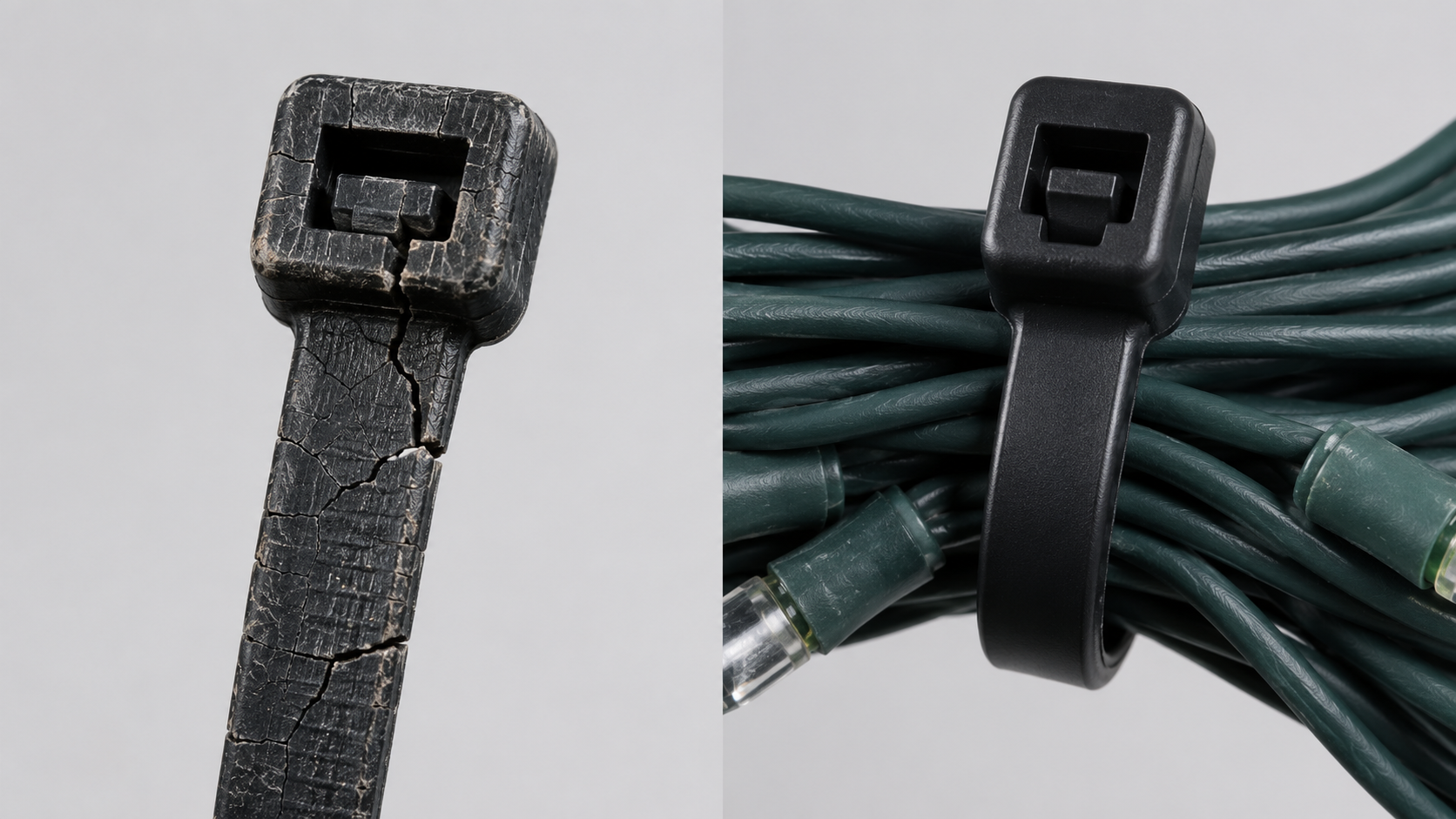
Side by side, the two types look almost identical fresh out of the bag. The difference only shows up after weeks outside. An indoor-rated tie left on a gutter through December often develops visible stress fractures and a chalky, faded surface — early signs it's about to snap. A UV-rated tie in the same spot stays flexible and holds its color.
That difference matters most exactly when you don't want to be back up a ladder: during a cold snap, a windstorm, or over the holidays when a fallen light string isn't getting fixed until someone's free.
The tie that's still holding after the first hard freeze is almost always the one rated for it from the start.
Get UV-rated zip ties built for outdoor holiday decorating
Shop outdoor zip ties →Which size for which job
| Job | Recommended size | Notes |
|---|---|---|
| Bundling a single light strand | 4"–6" | Small enough to keep loops tight and tidy |
| Attaching lights to gutters or fascia | 8"–10" | Enough length to loop around the gutter edge with slack |
| Securing a wreath or garland to a railing | 10" | Handles thicker railing profiles without over-stretching |
| Bundling extension cords along a fence line | Assorted 4"–12" | One box covers cord runs of varying thickness |
A 10-inch green tie is a practical single-size choice for most gutter and shrub light-hanging work, since it blends in against foliage and gives enough loop length for a gutter edge without excess tail. For mixed decorating jobs — lights, garland, and cord bundling in one afternoon — an assorted white pack covers more ground without extra trips back to the garage.
How to hang lights without damaging gutters or shingles
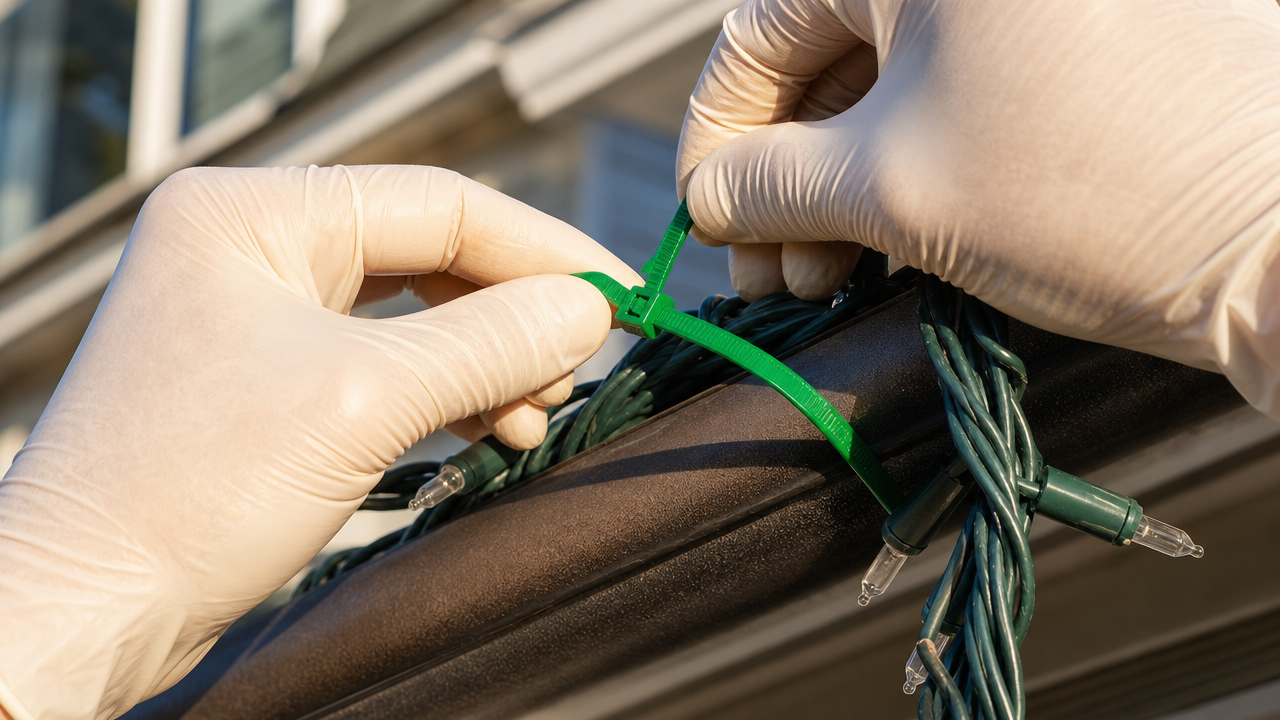
Step 1 — Loop around the gutter edge, not through it
Wrap the tie around the outside lip of the gutter rather than clipping directly to the roofline or shingles, which avoids putting holes or stress points in roofing material.
Step 2 — Leave slack for wind movement
Don't cinch the tie fully tight against the light strand. A little give lets the string move with wind gusts instead of pulling against a rigid anchor point.
Step 3 — Space ties every few feet
Spacing ties every 2–3 feet along a run distributes wind load across multiple anchor points instead of concentrating stress on just a couple of ties.
Step 4 — Trim tails after final adjustment
Wait until the lights are fully positioned and tested before trimming excess tie length, so you're not re-cutting new ties if a strand needs to shift.
Common mistakes and how to avoid them
Grabbing whatever's in the junk drawer
Mixed indoor and outdoor ties in a drawer often look the same until one snaps mid-winter. Keep a dedicated bag of UV-rated ties for seasonal decorating.
Over-tightening against gutters
Cinching a tie fully tight against a thin gutter edge can dent aluminum gutters or crack older vinyl fascia over a season of wind stress.
Using one size for every job
A single tie length forces awkward double-wraps on thick railings or wasted excess on thin cords — an assorted pack removes the guesswork.
Leaving ties up year-round
Even UV-rated ties degrade faster the longer they're exposed. Removing decorations and ties after the season extends the life of both the lights and the ties for next year.
Frequently asked questions
Can regular zip ties be used for outdoor holiday lights?
They can hold for a short display, but standard indoor-rated ties tend to become brittle and crack after weeks of UV exposure and freezing temperatures, so they're not a reliable choice for a full holiday season.
What size zip tie is best for hanging lights on a gutter?
8 to 10 inch ties generally give enough length to loop around a standard gutter edge with slack for wind movement, without excess tail to trim.
Do zip ties damage gutters or shingles?
Looped loosely around a gutter edge, they typically don't cause damage. Problems tend to come from over-tightening or from ties that are stapled or nailed directly into roofing material instead.
How long do outdoor-rated zip ties last?
UV-rated nylon ties generally hold up through a full season of outdoor exposure. Removing them after the holidays rather than leaving them up year-round extends how many seasons a batch will last.
What color zip tie is best for holiday lights?
Green blends in well against wreaths, garland, and foliage, while white is easier to spot for quick removal after the season and works well against lighter trim or siding.
Bottom line
Outdoor holiday decorating is hard on zip ties in ways indoor use never tests. Skip the junk-drawer ties and use UV-rated outdoor ties sized for the job — 8–10 inch for gutters and light strands, an assorted pack if you're tackling lights, garland, and cord bundling in the same afternoon. It's a small cost difference that keeps the display up through the whole season instead of half of it.
Stock up before you're back up the ladder mid-January
Shop outdoor zip ties for holiday decorating →


